
Malaysia’s competitive gaming scene is rapidly developing, with thousands of players seeking structured competition and a professional path. CS2 tournaments offer local talent a platform to showcase skills, compete for substantial prize pools, and build a career in esports. The Malaysian tournament circuit includes online qualifiers, local LAN finals, regional championships, and international qualification events catering to both amateur and semi-professional teams. Alongside the growing popularity of these competitions, the online betting market is also rapidly expanding, with leading platforms like DK88 Malaysia offering fans a wide selection of CS2 markets, high odds, and favorable conditions for predictions. This guide covers tournament formats, qualification pathways, prize structures, and practical steps for entering the CS2 competitive ecosystem in Malaysia.
Overview of CS2 Tournaments in Malaysia
CS2 tournaments in Malaysia range from grassroots community cups to official regional qualifiers for international majors. The ecosystem includes monthly online leagues, quarterly LAN events in Kuala Lumpur and Penang, and annual championship circuits with prize pools exceeding RM 50,000. Organizers such as ESL Malaysia, MyGameOn, and independent community hubs run year-round calendars, ensuring consistent competitive opportunities.
Most events follow double-elimination or Swiss-system brackets, with team sizes fixed at five players plus one substitute. Registration typically opens four to six weeks before each cs2 tournament, with entry fees ranging from free for open qualifiers to RM 200–500 for premium LANs. Skill tiers often separate divisions into Amateur, Intermediate, and Open categories, preventing mismatches and fostering balanced competition.
The Development of Competitive CS2 in Malaysia
Counter-Strike 2 inherited a well-established legacy from CS:GO in Malaysia, where the competitive scene dates back to 2014. Early tournaments were small cyber-cafe leagues with prizes under RM 5,000, but growth accelerated after 2018 when esports received government recognition through the Malaysia Digital Economy Corporation (MDEC). By 2020, regional finals regularly featured RM 30,000+ pools, and live broadcasts reached tens of thousands of concurrent viewers.
The transition from CS:GO to CS2 in late 2023 initially fragmented the player base, as hardware requirements increased and map mechanics changed. However, by mid-2024, most competitive circuits had fully migrated, and participation numbers returned to pre-transition levels. Today, the cs2 team ranking system in Malaysia mirrors international standards, using points accumulated through domestic and regional performances.
Major Local and Regional CS2 Events
The Malaysian calendar features three flagship tournaments annually: the Malaysia CS2 Championship (March), the Kuala Lumpur LAN Masters (August), and the Year-End Invitational (December). The Championship is the largest, with 64 teams entering open qualifiers and a final prize pool around RM 60,000. LAN Masters restricts entry to the top 16 teams by ranking, ensuring high-skill matches and attracting sponsorship from gaming peripherals brands.
Regional events extend beyond Malaysian borders. The CS Asia Championships 2026, concluded in September with Legacy claiming first place and a $1,000,000 prize pool, featured eight Malaysian teams in the 16-team bracket. Similarly, the FISSURE Playground #3 in Suzhou drew four Malaysian squads, offering exposure to Chinese and Korean competition styles.
Upcoming highlights for the cs2 tournament 2026 calendar include the PGL Singapore Major in November-December, with 32 teams and $1,250,000 at stake. Malaysian teams compete for two Southeast Asian qualifier slots, with preliminary rounds scheduled in October.
Tournament Formats and Qualification Systems
Most CS2 tournaments in Malaysia employ either Swiss-system groups followed by single-elimination playoffs, or pure double-elimination brackets from Round 1. Swiss formats typically run three to five rounds, seeding the top eight teams into a bracket. This method balances fairness and schedule efficiency, completing most events within two days for online play or three days for LAN.
Qualification paths vary by event tier. Open tournaments require only team registration and payment of entry fees, with no skill prerequisites. Closed qualifiers demand minimum ranking points—usually 500 for Intermediate tier, 1,200 for Open tier—earned through prior finishes. Invitational events select participants based on season-long performance metrics or direct invitation from organizers.
Round structures favor best-of-one maps in early Swiss rounds, transitioning to best-of-three for playoffs. Grand finals universally adopt best-of-five format, with map veto conducted via automated systems minutes before match start. Anti-cheat measures include mandatory installation of third-party platforms (FACEIT Anti-Cheat or ESEA Client), live referee monitoring for LAN events, and demo review for flagged performances.
Popular Malaysian CS2 Teams and Players
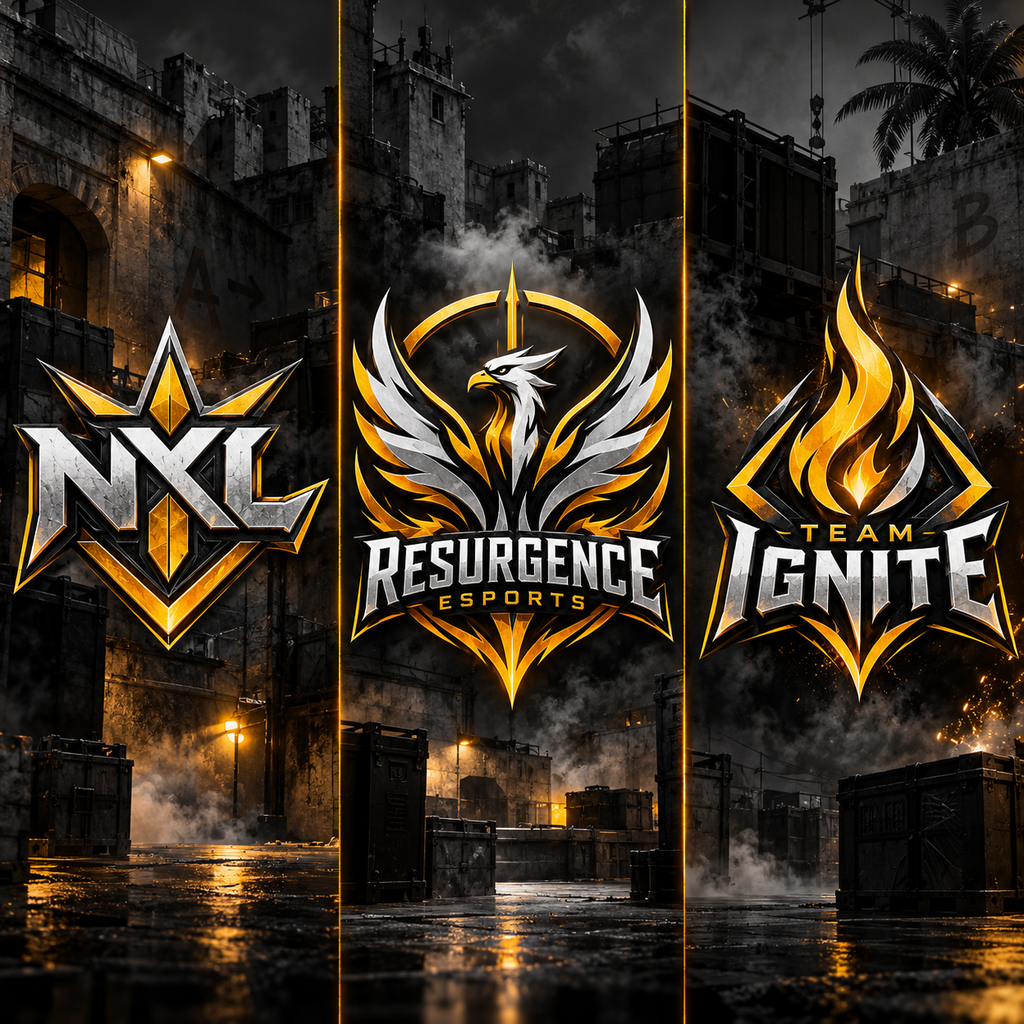
The current cs2 team ranking in Malaysia places Team NXL at the top, with 2,450 points from six tournament victories in 2025–2026. Their roster—featuring IGL “Zephyr,” AWPer “Fenrir,” and entry fragger “Blaze”—has represented Malaysia at three international qualifiers. NXL’s tactical adaptability and strong T-side executes on Mirage and Inferno set them apart domestically.
Second-ranked Resurgence Esports (2,130 points) specializes in aim-duel heavy playstyles, leveraging individual mechanics over structured strategies. Star rifler “Vortex” holds a 1.28 rating across recent LANs, while support player “Luna” anchors site defenses with consistent utility usage.
Emerging contenders include Team Ignite (1,780 points), an all-university squad that rose through open qualifiers in early 2026, and Phantom Crew (1,650 points), veterans from the CS:GO era adapting to CS2 mechanics.
Prize Pools and Tournament Rewards
Prize distribution in Malaysian CS2 tournaments follows tiered structures, with 40–50% allocated to first place, 20–25% to second, and the remainder split among third to eighth positions. The Malaysia CS2 Championship 2026 distributed RM 60,000 as follows: RM 28,000 (1st), RM 15,000 (2nd), RM 8,000 (3rd), RM 5,000 (4th), and RM 1,000 each for 5th–8th.
Beyond cash, rewards include hardware sponsorships (gaming mice, keyboards, headsets valued at RM 2,000–5,000 per player), bootcamp funding for international qualifiers, and contract offers from esports organizations. Top-three finishers in major events often receive invitations to closed qualifiers for regional championships, bypassing open brackets and saving registration fees.
International events accessible to Malaysian teams offer exponentially larger pools. The PGL Singapore Major 2026 provides $1,250,000 total, with last-place teams still earning $15,000. Prizes under RM 10,000 typically transfer within two weeks via bank or e-wallet, while larger sums may require tax documentation and take up to six weeks.
Online and LAN CS2 Competitions
Online CS2 tournaments dominate the Malaysian calendar, accounting for roughly 80% of annual events. Platforms like FACEIT and ESEA host ladder leagues with automated matchmaking, while community Discord servers organize weekly cups. Advantages include zero travel costs, flexible scheduling, and accessibility for players outside major cities.
LAN competitions provide equal hardware and latency conditions, critical for high-stakes matches. Major LANs supply uniform PCs (typically Intel i9 / RTX 4080 setups), 240Hz monitors, and single-digit ping to local servers. The atmosphere—live crowds, stage lighting, referee oversight—also replicates international tournament conditions, preparing teams for overseas qualifiers.
Hybrid formats combine both: online qualifiers narrow fields to eight or sixteen teams, which then compete in a LAN final. This structure maximizes participation while controlling venue costs. The 2026 Kuala Lumpur LAN Masters used this model, with 48 teams entering online rounds and the top 16 advancing to a three-day LAN playoff at a Petaling Jaya esports arena.
How to Join CS2 Tournaments in Malaysia
Entering a cs2 tournament begins with assembling a five-player roster plus one substitute, all registered on the tournament platform (FACEIT, Challengermode, or organizer-specific sites). Each player creates an account, links their Steam profile, and completes anti-cheat software installation. Team captains then register the roster, pay entry fees if applicable, and confirm availability for scheduled match windows.
Open qualifiers require no rank prerequisites but demand punctuality—no-shows result in automatic forfeits and potential point penalties. Teams must join match lobbies within five minutes of scheduled start times, with server and map veto completed in designated chatrooms.
For closed or invitational events, teams need ranking points earned through prior finishes. Points decay monthly (5% reduction per month of inactivity), incentivizing consistent participation. Rosters locked 48 hours before tournament start cannot add or substitute players, enforcing roster stability.
New players should start with community cups offering RM 500–1,000 prizes and minimal entry barriers. Weekly “Rising Stars” tournaments, hosted by cafes in Kuala Lumpur and Johor Bahru, welcome unranked teams and provide coaching feedback post-match.
Streaming, Coverage, and Esports Communities
Live broadcasts of major CS2 tournaments in Malaysia stream on Twitch, YouTube, and Facebook Gaming, with concurrent viewership peaking around 12,000 for domestic finals and 40,000+ for regional qualifiers involving Malaysian teams. Official channels provide English and Bahasa Malaysia commentary, while community co-streams allow popular local streamers to add personalized analysis.
Coverage extends beyond live matches. Post-event VOD reviews, player interviews, and tactical breakdowns appear on organizer YouTube channels within days of tournament conclusions. Fan-run statistics sites track individual and team performance across seasons.
Community hubs centralize information and discussion. The “Malaysia CS2 Competitive” Discord server hosts 8,000+ members, providing channels for LFT (looking for team) posts, scrim scheduling, and rule clarifications. Subreddit r/MalaysiaCS2 aggregates tournament announcements, roster changes, and match results.
The Future of CS2 Esports in Malaysia
Projected growth for the cs2 tournament 2026 landscape includes increased corporate sponsorship, with telecommunications and energy drink brands allocating RM 2–5 million annually to esports partnerships. Government initiatives under MDEC’s National Esports Blueprint aim to establish a National Esports Centre in Cyberjaya by Q4 2026, providing subsidized LAN facilities and bootcamp spaces for top teams.
International integration will deepen. Valve’s updated Regional Major Ranking (RMR) system allocates Southeast Asia two guaranteed slots for 2027 majors, up from one in prior years. Malaysian teams competing in the Asian RMR circuit will face Thai, Singaporean, and Indonesian rosters, with cumulative points determining major invitations.
Grassroots development programs are expanding. Universities in Kuala Lumpur, Penang, and Johor now offer esports scholarships covering tuition and equipment costs for high-performing players. High-school leagues introduce CS2 to younger demographics, building talent pipelines that feed into semi-professional circuits by age 18–20.
FAQ
What are the biggest CS2 tournaments in Malaysia for 2026?
The Malaysia CS2 Championship (March, RM 60,000 prize pool), Kuala Lumpur LAN Masters (August, RM 45,000), and Year-End Invitational (December, RM 50,000) represent the three largest domestic events. Additionally, Malaysian teams compete in regional qualifiers for the PGL Singapore Major 2026 ($1,250,000 total pool, November-December) and the CS Asia Championships.
How do I check current cs2 team ranking in Malaysia?
Official rankings update monthly on the Malaysia Esports Federation website and FACEIT leaderboards. Team NXL currently leads with 2,450 points, followed by Resurgence Esports (2,130 points) and Team Ignite (1,780 points). Points derive from tournament placements, with decay applied for inactivity exceeding 30 days.
Can amateur teams join CS2 tournaments without prior experience?
Yes, open qualifiers and community cups welcome teams of all skill levels. Entry fees range from free to RM 200, with no rank prerequisites. Weekly “Rising Stars” events in Kuala Lumpur and Johor Bahru specifically target new competitors, offering RM 500–1,000 prizes and post-match coaching feedback.
What prize pools can teams expect in local CS2 tournaments?
Community cups offer RM 500–2,000, intermediate LANs RM 5,000–15,000, and major championships RM 45,000–60,000. First-place finishers typically receive 40–50% of the total pool, with distributions extending through eighth place in larger events. International qualifiers accessible to Malaysian teams feature pools exceeding $100,000.
Where can I watch live broadcasts of Malaysian CS2 tournaments?
Official streams air on organizer Twitch and YouTube channels, with Bahasa Malaysia and English commentary options. The “Malaysia CS2 Competitive” Discord server (8,000+ members) posts schedules, while r/MalaysiaCS2 aggregates links and results. Peak viewership for domestic finals reaches 12,000 concurrent viewers.
Are there qualification requirements for international CS2 tournaments?
Regional qualifiers like the PGL Singapore Major require teams to rank within the top eight domestically or accumulate sufficient RMR points through Asian circuit events. Open slots exist for teams willing to compete in preliminary online rounds, which typically begin two months before the main event.
What equipment and software do I need for competitive CS2 play?
Minimum requirements include a PC capable of consistent 144+ FPS, a 144Hz monitor, and stable internet (minimum 10 Mbps down, 5 Mbps up, <30ms ping to Singapore servers). Mandatory software includes Steam, CS2, and platform-specific anti-cheat (FACEIT AC or ESEA Client). LAN tournaments provide standardized hardware, eliminating personal equipment needs for finals.
Please note: Participation in esports tournaments is intended for individuals aged 18 and above. Competitive gaming requires significant time investment and does not guarantee financial returns. Always prioritize responsible gaming practices, balance competition with other life commitments, and seek support if gaming negatively impacts well-being.